

How Engagements Work
FOSSnix IT engagements are designed to guide organizations from assessment through deployment with practical planning, documented systems, and infrastructure built for long-term ownership and continuity.
A Clear Path to Digital Sovereignty
We take a structured approach to designing, deploying, and managing your infrastructure. Each step is clearly defined so expectations, scope, and outcomes remain aligned.
From initial assessment to long-term management, every step is structured, transparent, and designed around your business.

1. Assess
Understand your current environment and goals
We start by gathering the information needed to design the right system.
What we look at:
- Number of users and workflows
- Current systems and dependencies
- Security and access requirements
- Growth expectations
What you get:
- Clear understanding of your current state
- Identification of risks and limitations
- Defined goals for your environment

2. Design
Build an infrastructure plan tailored to your business
We translate your requirements into a complete system design.
What this includes:
- Hardware and infrastructure layout
- Network segmentation and security design
- Service selection (file platform, backups, identity)
- Capacity and performance planning
What you get:
- A defined architecture for your environment
- Clear scope of what will be deployed
- Alignment between your needs and the solution
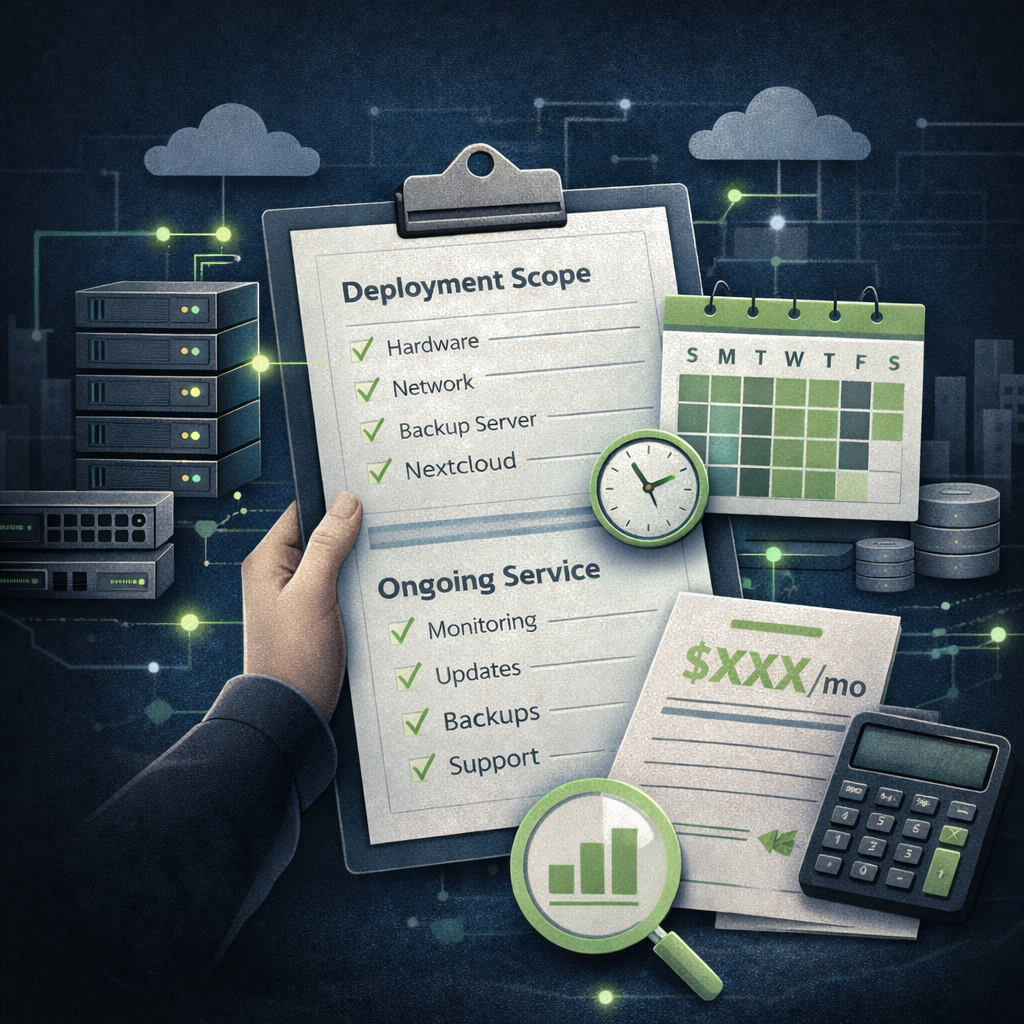
3. Scope & Proposal
Define the project and ongoing service
You receive a clear breakdown of what will be delivered and how it will be managed.
What’s included:
- Deployment scope
- Estimated timeline
- Monthly management model
- Pricing based on your environment
What you get:
- No ambiguity about deliverables
- No hidden components
- A predictable engagement structure

4. Deploy
Install and configure your infrastructure on-site
We build your environment and bring it into operation.
What happens during deployment:
- Hardware installation and configuration
- Network setup and segmentation
- Service deployment (file platform, backups, access)
- Initial data migration (if applicable)
What you get:
- A fully operational environment
- Systems configured for security and stability
- Documentation of your deployment

5. Validate
Ensure everything operates as intended
Systems are verified before transitioning to optional ongoing management or client handover.
What is validated:
- System functionality and performance
- Backup and recovery processes
- Secure access and connectivity
- Monitoring and alerting
What you get:
- Confidence that systems are working correctly
- Verified recovery capability
- A stable baseline for operations
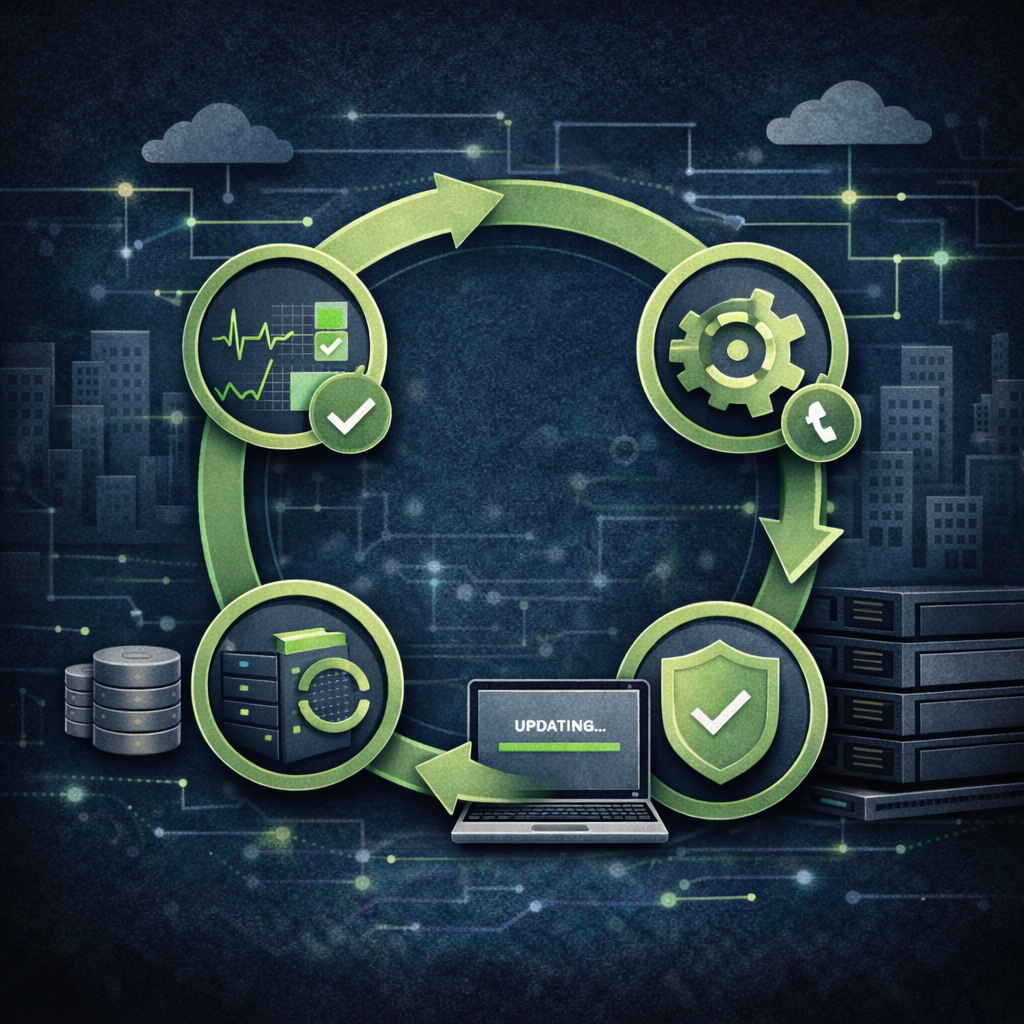
6. Manage
Continuous operation, maintenance, and improvement
You can opt to have your infrastructure actively managed long-term.
What this includes:
- Monitoring and alerting
- Updates and patching
- Backup verification
- Security maintenance
- Ongoing support
What you get:
- Stable, secure systems
- Reduced operational risk
- A partner responsible for keeping everything running