

Digital Sovereignty
Technology should never own your business.
Digital sovereignty is the principle that your business should remain in control of its data, infrastructure, and future. That means understanding where your information lives, reducing unnecessary dependence on vendors, designing for resilience, and building systems that continue to serve your business as it grows.
What We Mean by Digital Sovereignty
More than ownership.
More than security.
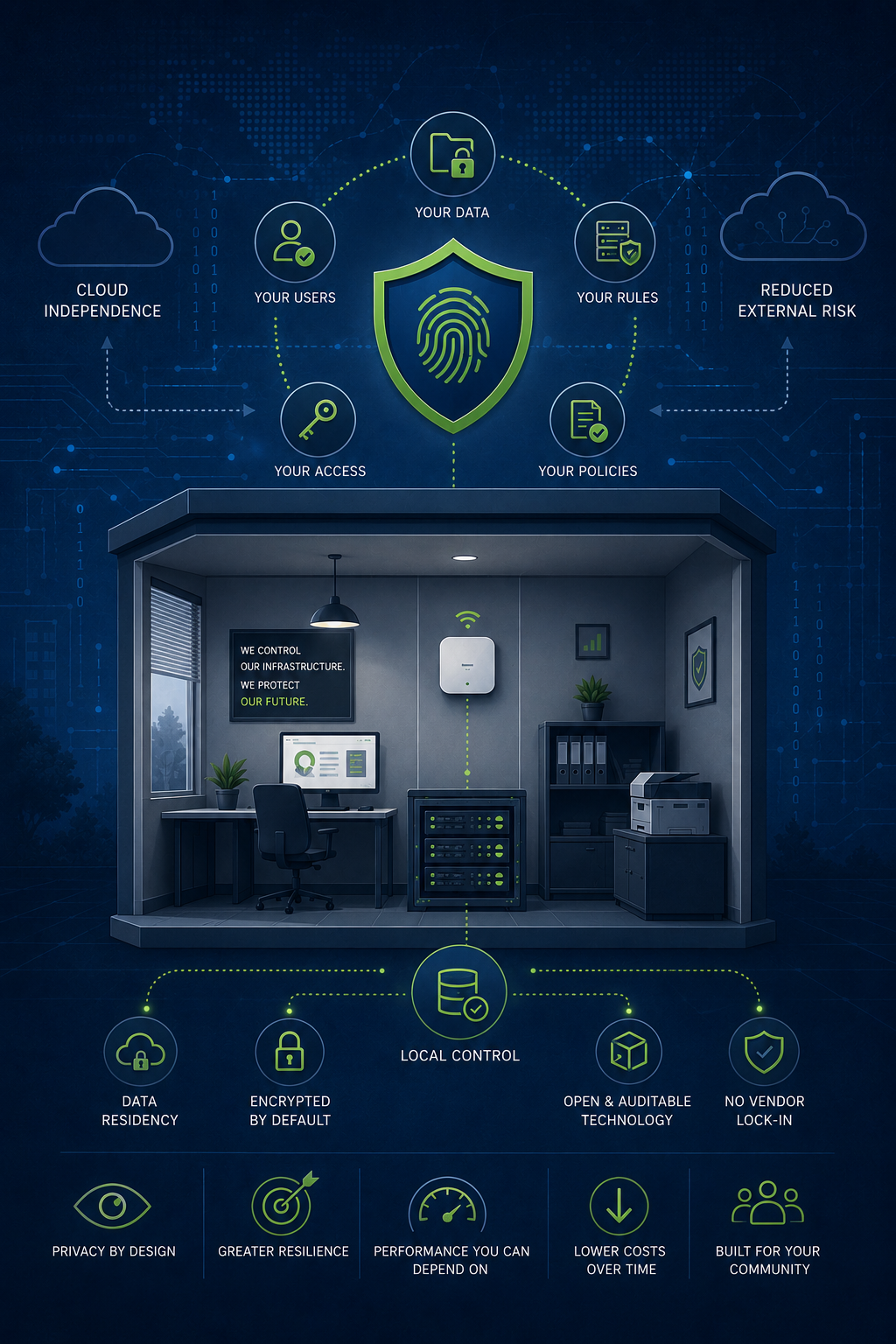
Digital sovereignty is the ability to operate your business on your own terms.
It means your technology serves your business—not the other way around.
Too many organizations gradually surrender control without realizing it. Files become scattered across cloud services, passwords live in personal accounts, backups are never tested, and critical knowledge exists only in the mind of one employee or consultant. Every new subscription solves one problem while creating another dependency.
Over time, the business still owns its products, customers, and reputation—but it no longer truly controls the systems that make the business possible.
Digital sovereignty is about reversing that trend.
For a small business, technology isn’t just a convenience.
It stores customer information.
It protects financial records.
It preserves years of work.
It enables communication.
It keeps operations running every day.
When those systems become dependent on vendors, undocumented configurations, or proprietary platforms, the business becomes fragile.
The goal isn’t to avoid cloud services or reject modern technology.
The goal is to ensure your business remains in control regardless of which technologies you choose.
Our Five Principles of Digital Sovereignty
1. Own Your Data
Your business data should belong to your business.
You should know:
• Where it lives
• Who has access
• How it is backed up
• How it can be restored
• How it can be exported
No business should discover that years of work cannot be recovered because it existed only inside a single service or account.
Ownership begins with knowing where your information is and ensuring you can always retrieve it.
2. Control Your Technology
Technology should remain understandable.
That doesn’t mean every business owner must become a systems administrator.
It means your infrastructure should be documented, maintainable, and designed so another qualified professional can support it without rebuilding everything from scratch.
Your business should never become dependent on one person’s memory.
3. Reduce Vendor Lock-In
Every vendor relationship creates some level of dependence.
Healthy dependence is acceptable.
Permanent lock-in is not.
We prefer technologies built on open standards, portable data formats, and documented interfaces because they preserve future choices.
If your needs change tomorrow, your technology should be able to change with you.
4. Build for Resilience
Failures happen.
Hardware fails.
Accounts become compromised.
Cloud services experience outages.
People make mistakes.
Digital sovereignty means preparing for those realities before they occur.
That includes:
• Reliable backups
• Restore testing
• Infrastructure monitoring
• Secure remote access
• Least-privilege administration
• Documentation
• Disaster recovery planning
Resilience is not built during an emergency.
It is built beforehand.
5. Document Everything
Documentation is one of the most overlooked forms of security.
A business cannot truly own its infrastructure if nobody understands how it works.
Good documentation allows systems to be maintained, recovered, expanded, and transferred without starting over.
It reduces downtime.
It improves security.
It protects against employee turnover.
It makes every future decision easier.
Documentation transforms technology from tribal knowledge into business knowledge.
What Digital Sovereignty Is Not
Digital sovereignty does not mean avoiding the cloud.
It does not require self-hosting everything.
It does not mean rejecting Microsoft, Google, or any other technology provider.
It is not about ideology.
It is about maintaining ownership, portability, visibility, and control regardless of the platforms you choose.
Sometimes the right answer is a cloud service.
Sometimes it’s an open-source solution.
Sometimes it’s a hybrid of both.
The important question is not who owns the software.
The important question is whether your business remains in control.
Why This Matters for Small Businesses
Large enterprises have dedicated IT departments.
Small businesses often have owners wearing every hat at once.
That makes every technology decision more important.
The systems supporting a five-person company may be just as critical as those supporting a five-hundred-person company.
The difference is that smaller businesses rarely have the time or budget to recover from avoidable mistakes.
We believe they deserve infrastructure designed with the same discipline—just without the unnecessary complexity.
The FOSSnix Philosophy
At FOSSnix IT, we believe technology should create independence, not dependence.
Every recommendation we make is guided by a simple question:
Will this give the client more control over their business five years from now than they have today?
If the answer is yes, we’re moving in the right direction.
Because digital sovereignty isn’t about owning servers.
It’s about owning your future.
Our Commitment
We build practical, ownership-first infrastructure for businesses that are small in scale but serious about the systems they depend on.
That means:
• Technology you understand.
• Data you control.
• Backups you can restore.
• Documentation you can rely on.
• Security designed into the foundation.
• Infrastructure that serves your business—not someone else’s platform.
That’s what we mean by digital sovereignty.
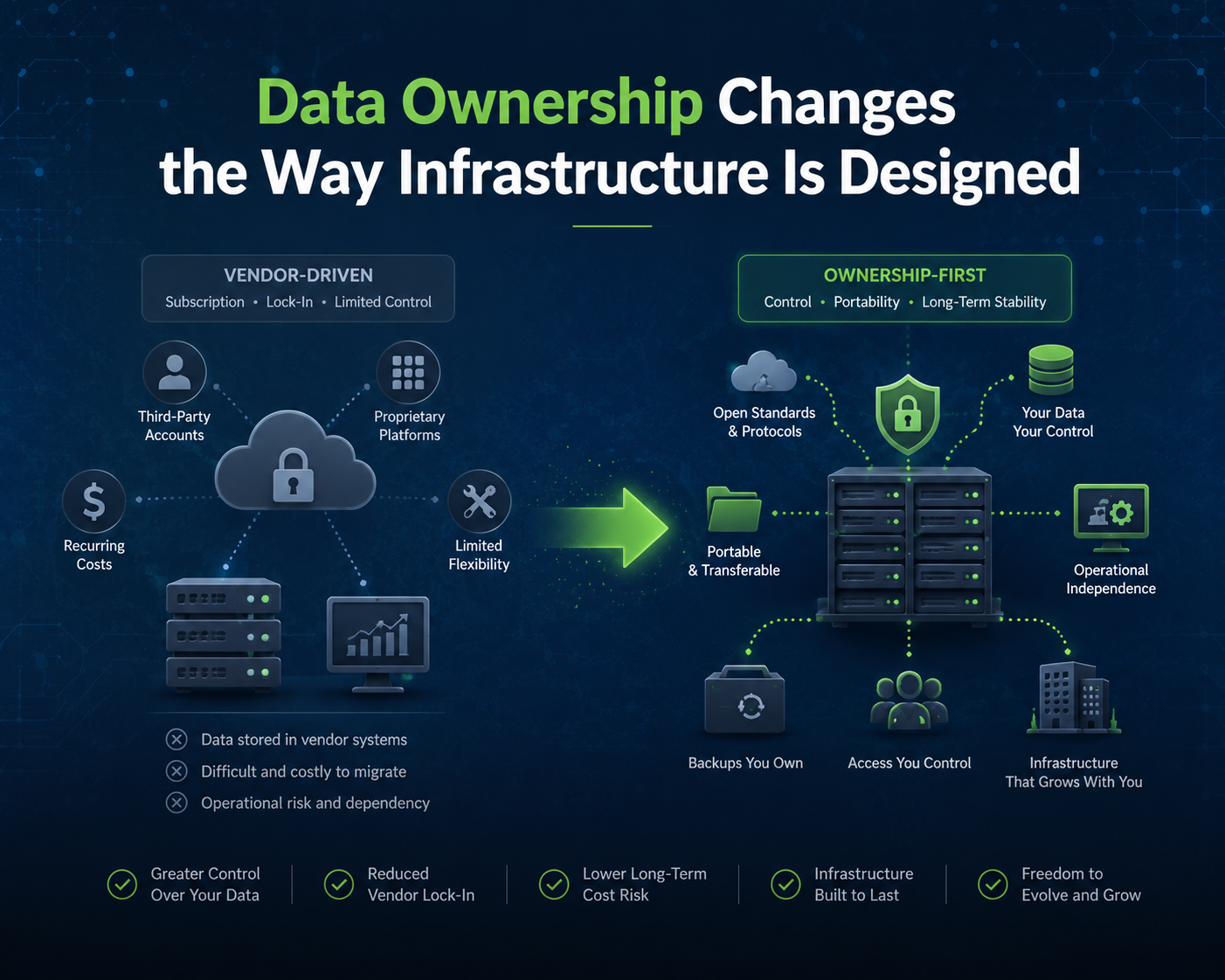
Ready to Build Technology You Actually Own?
Digital sovereignty isn’t achieved by buying one product or switching one vendor.
It’s built intentionally—through secure infrastructure, resilient backups, clear documentation, and technology designed around your business instead of someone else’s platform.
Whether you’re starting from scratch or untangling years of accumulated complexity, FOSSnix IT can help you build an ownership-first foundation that’s secure, documented, resilient, and designed to grow with your business.
Learn how FOSSnix IT designs infrastructure for businesses that value independence.