Open-Source Business Software Stack
Most modern businesses rely on dozens of disconnected SaaS applications—each with its own subscription, limitations, and data ownership concerns.
FOSSnix IT takes a different approach: a Linux-based, open-source software stack designed to replace common business tools with integrated, self-hosted solutions you control.
The result is a unified platform that reduces cost, simplifies management, and gives your organization full ownership of its systems and data.
How the Software Layer Fits into the Stack

Infrastructure provides the foundation—but software is what turns that foundation into usable business systems.
The FOSSnix IT software layer is built on Linux-based, open-source platforms that power everything from file storage and identity to communication and monitoring. These services run as an integrated system within your infrastructure—designed for reliability, performance, and full control.
Instead of relying on dozens of disconnected SaaS subscriptions, your business operates on a self-hosted platform where systems work together by design, not by external integrations.
Core Software Layers
Modern infrastructure is built from multiple specialized systems that work together to deliver reliable services. Rather than relying on a single platform to perform every role, the FOSSnix open-source business software stack is organized into functional layers—each responsible for a specific part of the environment.
These layers include the virtualization platform, networking and security services, collaboration tools, monitoring systems, backup platforms, and operational tools used to manage the environment. Together they form a cohesive platform that supports everyday business operations while remaining flexible, transparent, and maintainable over time.
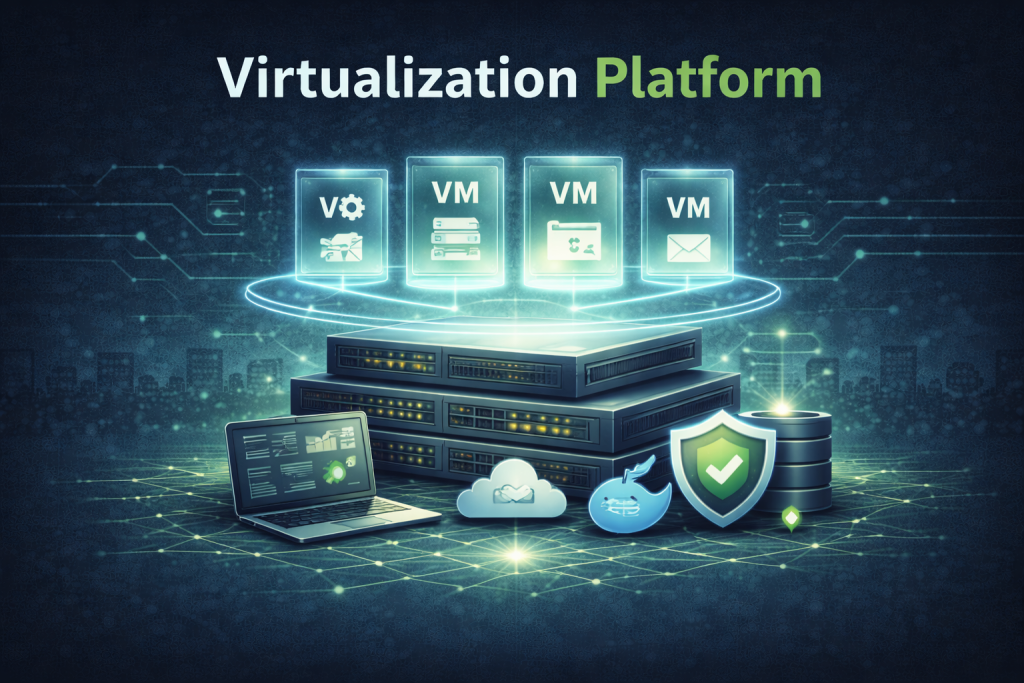
Virtualization Platform
The virtualization layer allows multiple systems and services to run reliably on shared infrastructure.
Typical components include platforms such as Proxmox VE, which provide:
• Virtual machines
• Container platforms
• High-availability clustering
• Storage management
• Snapshot and backup integration
This layer allows infrastructure to be flexible, resilient, and efficiently utilized.

Private Cloud Services
Private cloud platforms provide core collaboration and file services without relying on external SaaS providers.
Typical services include:
• File storage and synchronization
• Secure file sharing
• Document collaboration
• Calendars and contacts
• Team workspaces
Platforms such as Nextcloud deliver these capabilities while keeping business data under direct organizational control.

Networking & Security
Modern infrastructure requires software-defined networking and strong security controls.
The networking layer provides:
• Firewall and routing services
• Secure VPN access
• Network segmentation
• DNS and internal service discovery
• Traffic monitoring
These systems ensure that infrastructure remains secure, controlled, and observable.
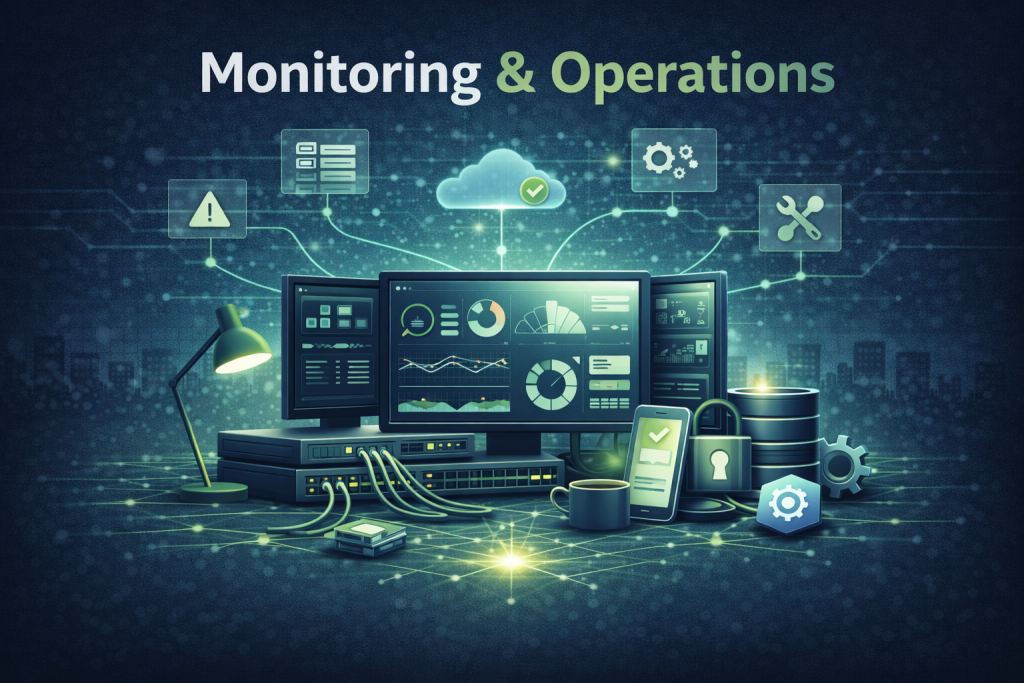
Monitoring & Operations
Reliable infrastructure requires continuous visibility into system health and performance.
Monitoring platforms provide:
• Infrastructure monitoring
• Service availability tracking
• Alerting and diagnostics
• Performance metrics
• Operational dashboards
This layer allows systems to be proactively managed rather than reactively repaired.

Knowledge & Documentation
A well-run infrastructure environment requires clear documentation and operational knowledge.
Documentation platforms provide:
• Internal knowledge bases
• System runbooks
• Architecture documentation
• Operational procedures
This ensures systems remain understandable and maintainable over time.
Business Infrastructure Stack
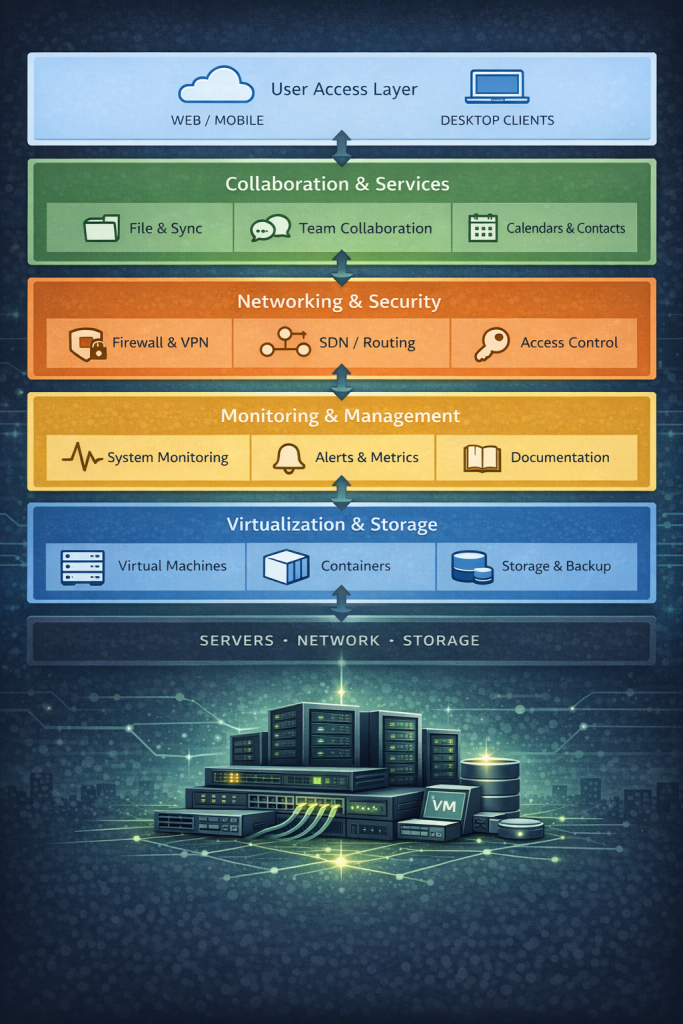
Integration & Reliability

Modern infrastructure is rarely built from a single vendor. Instead, it relies on a set of specialized platforms that work well together.
The FOSSnix open-source business software stack is intentionally composed of mature open platforms that integrate through open standards and well-understood interfaces. These systems run on a shared infrastructure foundation, are monitored continuously, and are documented as part of a unified environment.
This approach results in:
- predictable and transparent infrastructure
- fewer hidden dependencies between vendors
- systems that can evolve without large-scale replacement
- infrastructure that remains understandable and maintainable over time
Our Typical Open-Source Business Software Stack Deployment
The FOSSnix platform uses mature open infrastructure software that is widely deployed in professional environments ranging from small businesses to global data centers.
Common components of the stack include platforms such as Proxmox VE for virtualization, Nextcloud for file services, collaboration, and document editing, and WireGuard for secure remote access. Infrastructure visibility is provided by monitoring systems such as Zabbix, while backup platforms like Vykar Backup ensure that systems and data remain recoverable.
Operational tools such as BookStack and FreeScout help maintain clear documentation and structured support workflows, while services like Postmark and Migadu support reliable transactional email delivery.
Together, these platforms form a stable and well-understood ecosystem built on open standards and long-term sustainability.