

Data Ownership First
Your business should control its infrastructure, data, backups, and operational systems — not depend entirely on a vendor’s platform decisions, subscription changes, or ecosystem lock-in.
FOSSnix IT builds practical, ownership-focused infrastructure using open-source and standards-based technologies that help organizations maintain control, portability, and long-term operational stability.
Your Business Data Should Not Depend on Someone Else’s Platform Decisions
Modern business IT is increasingly built on rental platforms, recurring subscriptions, and vendor-controlled ecosystems. Files, communication systems, authentication, backups, and operational workflows are often tied to services that businesses do not truly control.
For many organizations, this creates hidden long-term risk.
Pricing changes, platform discontinuations, forced migrations, account lockouts, and vendor-driven product changes can directly affect how a business operates. Even when cloud platforms are reliable, organizations may still lose visibility into where data lives, how it is retained, and how systems can be recovered independently.
FOSSnix IT takes a different approach.
We design infrastructure around ownership, portability, and operational control so your business can continue operating on its own terms.
What “Data Ownership First” Means
A Data Ownership First approach prioritizes infrastructure that allows your organization to:
- Maintain direct control over business-critical data
- Access systems without dependence on a single vendor ecosystem
- Retain visibility into backups and recovery processes
- Operate using open standards whenever practical
- Reduce long-term platform lock-in
- Preserve operational continuity during vendor or service changes
- Keep infrastructure portable and transferable
This does not mean avoiding cloud services entirely. It means designing systems intentionally so your business remains in control of the underlying data and operational workflows.
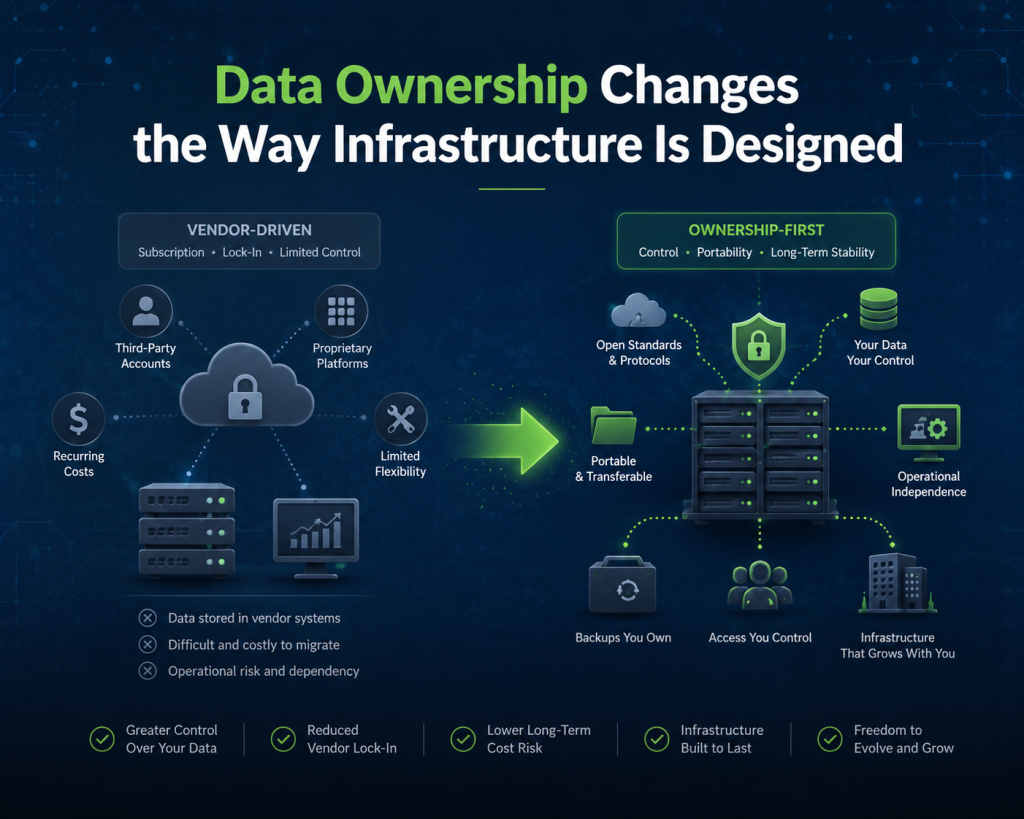
Ownership Changes the Way Infrastructure Is Designed
When ownership is the priority, infrastructure decisions are made differently.
Instead of asking:
“What subscription should we add?”
We ask:
“What does the business need to operate reliably for the long term?”
That often leads to infrastructure built around:
- Linux-based servers and services
- Open-source platforms
- Standardized protocols
- Self-hosted or hybrid systems
- Local and off-site backup ownership
- Secure remote access without exposing internal systems
- Documentation that remains with the client
- Infrastructure that can be maintained, transferred, or expanded over time
The result is infrastructure that behaves more like a business asset and less like a collection of rented applications.
Avoiding Vendor Lock-In
Many organizations discover vendor lock-in only after they are deeply committed to a platform.
Common examples include:
- File systems tied to proprietary collaboration platforms
- SaaS tools with expensive user-based scaling
- Backup systems that cannot be restored independently
- Authentication systems controlled entirely by third parties
- Proprietary ecosystems that make migration difficult or costly
A Data Ownership First strategy helps reduce these risks by favoring portability and interoperability wherever possible.
This gives businesses greater flexibility as they grow, change providers, expand locations, or adjust operational requirements.
Infrastructure Built for Longevity
Business infrastructure should outlive software trends.
FOSSnix IT focuses on infrastructure that can evolve over time without requiring complete replacement every few years. By using open technologies and standardized infrastructure practices, systems can often be upgraded, migrated, expanded, or restructured without starting over from scratch.
This approach is especially valuable for:
- Micro businesses
- Small offices
- Professional practices
- Organizations with long data retention requirements
- Businesses concerned about continuity and resilience
- Teams that want predictable operational control
Ownership Does Not Mean Complexity
One of the biggest misconceptions about ownership-focused infrastructure is that it requires large internal IT teams or enterprise-scale complexity.
In reality, modern open-source infrastructure can provide secure access, backups, collaboration, monitoring, and operational visibility in ways that are practical for smaller organizations.
The goal is not to make infrastructure more complicated.
The goal is to make infrastructure more understandable, maintainable, and controllable.
Infrastructure That Works for the Business — Not the Vendor
FOSSnix IT designs systems around operational stability, security, portability, and long-term maintainability.
That means infrastructure built to support your business operations rather than maximize dependency on a particular platform ecosystem.
Because when your business depends on its data, ownership matters.
Build Infrastructure You Control
If your business depends on its files, systems, and operational data, ownership matters.
FOSSnix IT helps organizations build secure, practical infrastructure designed around portability, resilience, and long-term control.
Understand Open-source Infrastructure