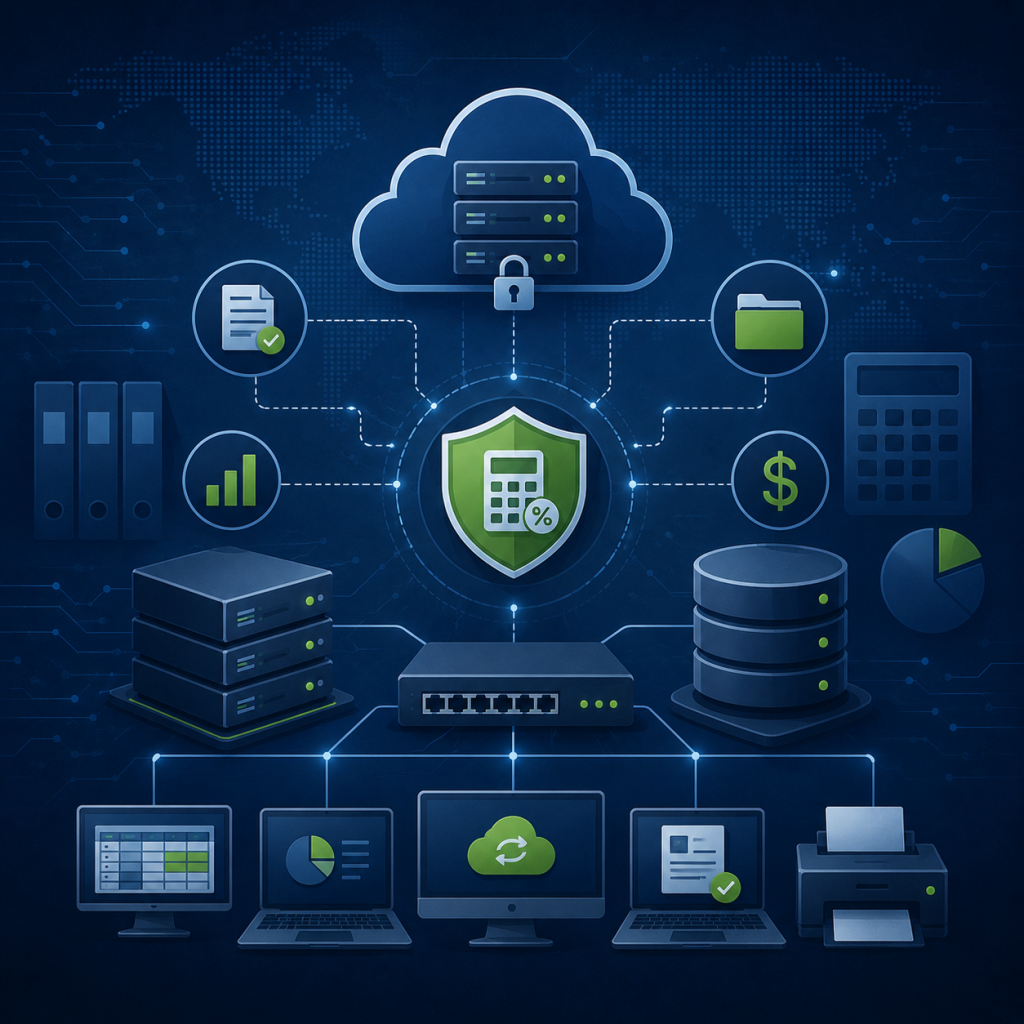
IT Infrastructure for Micro Bookkeeping & Tax Offices
Infrastructure Built for Tax Season Continuity
Reliable infrastructure for bookkeeping firms, payroll offices, and tax preparers that depend on secure document workflows, remote access, and dependable operational continuity.
Operational Challenges
Small bookkeeping and tax offices often depend on a mixture of cloud drives, email attachments, USB backups, shared passwords, and locally stored client records. These workflows may function during slower periods, but tax season exposes operational weaknesses quickly.
Remote preparers need dependable access to files. Historical client records must remain organized and recoverable. Downtime during filing deadlines directly impacts revenue, scheduling, and client trust. As offices grow, file management and backup reliability become increasingly difficult to maintain without centralized infrastructure.
How FOSSnix IT Supports This Environment
FOSSnix IT builds practical infrastructure for bookkeeping and tax offices that need centralized file storage, secure remote access, managed backups, documentation, and operational continuity without fully outsourcing operations to subscription platforms.
Systems are designed to support recurring document workflows, remote preparation, secure record retention, and predictable day-to-day operations for small financial offices.
Common Workflows
Typical environments include:
- Shared client financial records
- Seasonal workload spikes
- Remote tax preparation
- Payroll processing
- Recurring document intake
- Long-term document retention
- Secure internal file sharing
Example Infrastructure Stack
Core Infrastructure
- Private file storage
- Secure remote access VPN
- Managed backup and recovery
- Firewall and network security
Operational Support
- Documentation systems
- Monitoring and alerting
- Optional collaboration portals
- Centralized access management
Why This Matters
Tax and bookkeeping offices operate on continuity, organization, and client trust. Infrastructure failures during filing season create immediate operational disruption and can jeopardize access to critical historical records.
The goal is not to make a small accounting office “enterprise.” The goal is to provide dependable infrastructure sized to the actual operational workload, document sensitivity, and continuity requirements of a modern financial office.